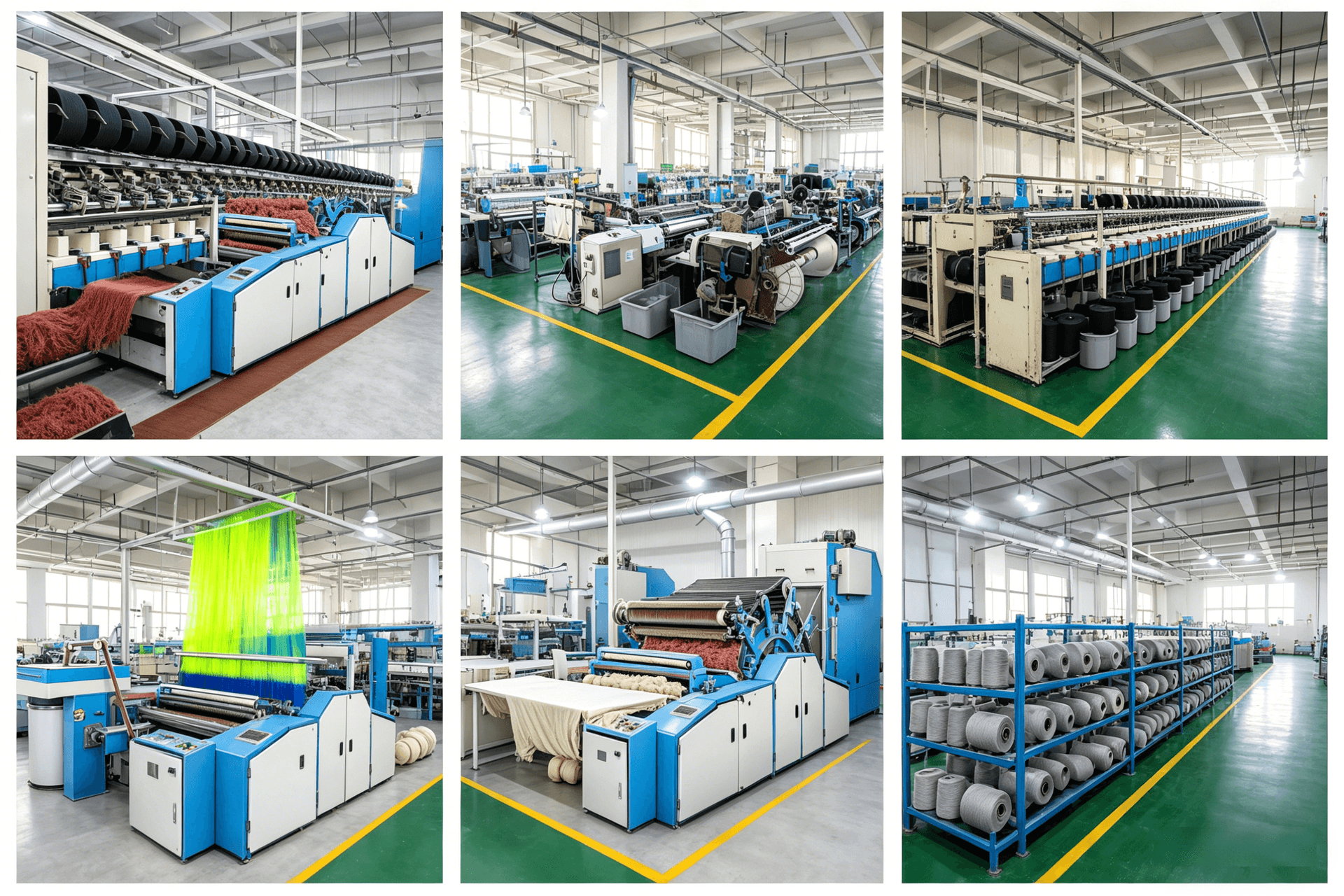
1. Ethically Sourced Wool & Precision Dyeing
The journey begins with the selection of premium raw wool, chosen for its micron fineness and crimp integrity.
Once cleaned, the wool undergoes a computer-controlled dyeing process.
Using eco-friendly pigments, we ensure deep color penetration and superior colorfastness. This allows us to achieve the vibrant palettes found in our seasonal wool scarves and the classic, muted tones of our luxury wool throws.
2. Advanced Carding & Fiber Alignment
Carding is where the "soul" of the fabric is formed. The dyed wool is passed through a series of fine wire rollers.
This stage untangles the fibers and removes any remaining impurities, aligning them into a thin, gossamer-like web known as a "sliver."
For our wool blankets, meticulous carding is essential to ensure a uniform density that provides optimal thermal insulation without unnecessary bulk.
3. Precision Spinning for Tensile Strength
The delicate slivers are drawn out and twisted using high-speed spinning frames to create yarn.
We adjust the "twist per inch" (TPI) depending on the final product.
A tighter twist is utilized for durable wool blankets, while a softer, more delicate spin is reserved for the fine yarns used in our premium wool scarves to ensure a gentle feel against the skin.
4. High-Tech Weaving & Intricate Design
Our computerized looms represent the perfect marriage of heritage and technology.
Thousands of warp and weft threads are interlaced at high speeds with microscopic precision.
This technology allows us to execute complex jacquard patterns and traditional tartans. Whether it is a large-scale geometric pattern for a wool throw or a subtle herringbone for a scarf, the structural integrity of the weave is flawless.
5. Fulling: The Secret to Texture
The "raw" woven fabric undergoes Fulling, a traditional finishing technique involving controlled application of moisture, heat, and friction.
This causes the fibers to interlock and shrink slightly.
Fulling is what gives our wool blankets their signature loft and wind-resistance, turning a loose weave into a dense, cozy fabric that traps heat effectively.
6. The Final Flourish: Raising & Napping
The final stage defines the tactile experience of the product.
Shearing: The surface is sheared to a precise height to ensure a smooth, pill-resistant finish.
Napping: Specialized teasels or metal brushes gently "tease" the surface fibers upward.
This creates the "nap" - the incredibly soft, fuzzy texture that makes our wool throws so inviting. Finally, each piece is washed in softened water to reach its peak softness before being hand-inspected for quality.