Blog
How to Wash Cashmere and Luxury Wool: The Ultimate Care Guide
Jun 2, 2026
Investing in a premium cashmere scarf, a fine Merino wool blanket, or a luxurious alpaca shawl brings unmatched comfort to your life. However, because these are natural, high-quality fibers, they require a little extra love and attention to maintain their softness, shape, and beauty over time.
Many people are afraid to clean their luxury wool pieces at home, fearing they will shrink or pill. Fortunately, with the right technique, caring for your premium textiles is simple. Here is our expert guide on how to clean, store, and maintain your luxury wool items.
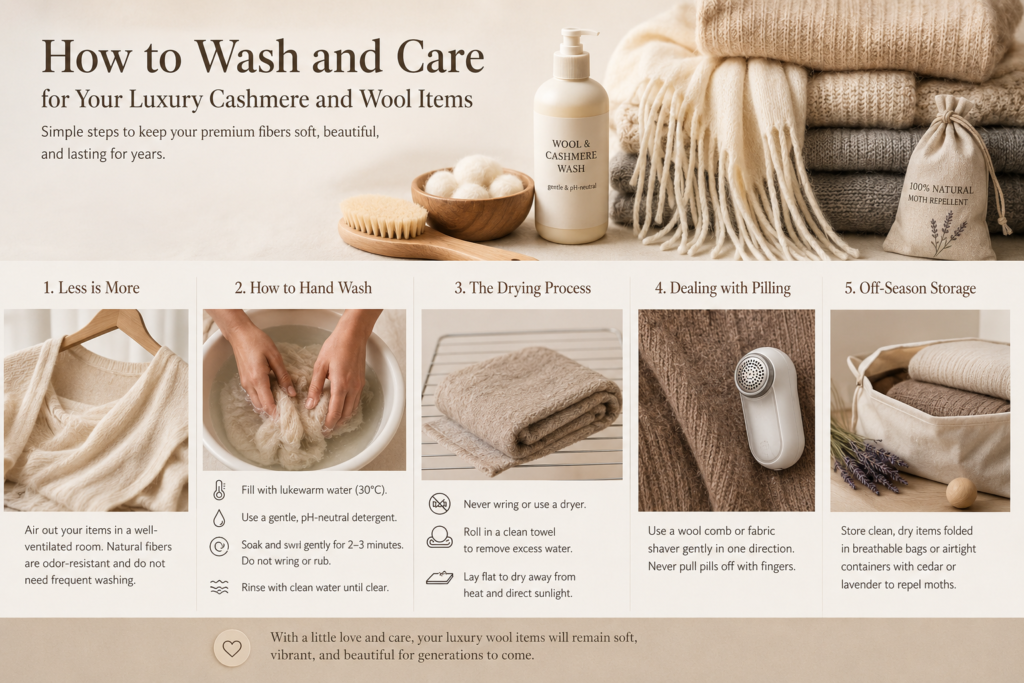
1. The Golden Rule: Less is More
Unlike synthetic materials, natural wool fibers like cashmere and alpaca are naturally odor-resistant and dirt-repellent. You do not need to wash your wool scarves or blankets after every wear. Often, simply hanging your scarf or airing out your Merino wool blanket in a well-ventilated room out of direct sunlight is enough to refresh it.
2. How to Hand Wash Successfully
When it is time for a thorough clean, hand washing is always the safest method. Avoid the dry cleaners unless the care label strictly demands it, as harsh chemicals can strip the natural oils from the fibers.
Step 1: Fill the basin. Fill a clean sink or basin with lukewarm water (around 30°C). Never use hot water, as it will cause the wool to shrink.
Step 2: Add gentle detergent. Use a specialized wool wash or a mild, pH-neutral baby shampoo. Dissolve it completely in the water.
Step 3: Soak and swirl. Submerge your cashmere scarf or alpaca shawl. Gently swirl it around for 2 to 3 minutes. Do not wring, scrub, or rub the fabric, as this causes pilling and felting.
Step 4: Rinse. Drain the soapy water and refill the basin with clean, lukewarm water to rinse the garment. Repeat until the water runs clear.
3. The Drying Process: Never Wring
Never put your luxury wool items in a mechanical dryer, and never wring them out by hand.
Instead, lay the wet scarf or blanket flat on a clean, dry towel.
Roll the towel up with the item inside, pressing gently to absorb excess water.
Unroll the towel, reshape the item, and lay it flat on a drying rack away from direct heat and sunlight. Hanging wet wool will stretch the fibers out of shape.
4. Dealing with Pilling
Pilling is a natural occurrence caused by friction, even on the finest Australian fine wool or cashmere. It is not a sign of poor quality. To remove pills, never pull them off with your fingers. Use a specialized wool comb or a fabric shaver gently in one direction to restore the smooth surface.
5. Off-Season Storage
Before storing your wool blankets and shawls for the summer, ensure they are completely clean and dry. Moths are attracted to human scents and oils left on fabrics. Store your items folded (never hung) in breathable cotton storage bags or airtight containers. Add natural cedar balls or lavender sachets to repel pests safely while leaving a beautiful, fresh scent.
By following these simple steps, your luxury wool investmInvesting in a premium cashmere scarf, a fine Merino wool blanket, or a luxurious alpaca shawl brings unmatched comfort to your life. However, because these are natural, high-quality fibers, they require a little extra love and attention. To maintain their softness, shape, and beauty over time, following a proper luxury wool care guide is essential.
Many people are afraid to clean their premium textiles at home, fearing they will shrink or pill. Fortunately, with the right technique, alpaca shawl maintenance and cashmere care are simple. Here is our expert guide on how to wash cashmere, clean Merino wool, and store your luxury items.
1. The Golden Rule: Less is More
Unlike synthetic materials, natural wool fibers like cashmere and alpaca are naturally odor-resistant and dirt-repellent. You do not need to wash your wool scarves or blankets after every wear. Often, simply hanging your scarf or learning how to refresh and air out your Merino wool blanket in a well-ventilated room out of direct sunlight is enough. Less frequent washing is the first secret to successful luxury wool care guide practices.
2. How to Hand Wash Cashmere Successfully
When it is time for a thorough clean, learning how to hand wash cashmere at home is always the safest method. Avoid the dry cleaners unless the care label strictly demands it, as harsh chemicals can strip the natural oils from the fibers. Here is how to clean merino wool and cashmere safely:
- Step 1: Fill the basin. Fill a clean sink or basin with lukewarm water (around 30°C). Never use hot water, as it will cause the wool to shrink.
- Step 2: Add gentle detergent. Use a specialized wool wash or a mild, pH-neutral baby shampoo. Dissolve it completely in the water.
- Step 3: Soak and swirl. Submerge your cashmere scarf or alpaca shawl. Gently swirl it around for 2 to 3 minutes. Do not wring, scrub, or rub the fabric, as this causes pilling and felting.
- Step 4: Rinse. Drain the soapy water and refill the basin with clean, lukewarm water to rinse the garment. Repeat until the water runs clear.
3. The Drying Process: Prevent Wool Sweater Shrinking
Never put your luxury wool items in a mechanical dryer, and never wring them out by hand. To prevent wool sweater shrinking or stretching, follow this flat-dry method:
- Lay the wet scarf or blanket flat on a clean, dry towel.
- Roll the towel up with the item inside, pressing gently to absorb excess water.
- Unroll the towel, reshape the item, and lay it flat on a drying rack away from direct heat and sunlight. Hanging wet wool will stretch the fibers out of shape.
4. Dealing with Pilling
Pilling is a natural occurrence caused by friction, even on the finest Australian fine wool or cashmere. It is not a sign of poor quality. As part of your regular alpaca shawl maintenance, never pull pills off with your fingers. Use a specialized wool comb or a fabric shaver gently in one direction to restore the smooth surface.
5. Off-Season Cashmere Scarf Storage
Before storing your wool blankets and shawls for the summer, ensure they are completely clean and dry. Moths are attracted to human scents and oils left on fabrics. For proper cashmere scarf storage, store your items folded (never hung) in breathable cotton storage bags or airtight containers. Add natural cedar balls or lavender sachets to repel pests safely while leaving a beautiful, fresh scent.
By knowing how to wash cashmere and maintaining your textiles properly, your luxury wool investments will remain incredibly soft, vibrant, and beautiful for generations to come.ents will remain incredibly soft, vibrant, and beautiful for generations to come.